
░░░░░░ Compost Computer:
More-Than-Human Design
Through Critical Climate Computing
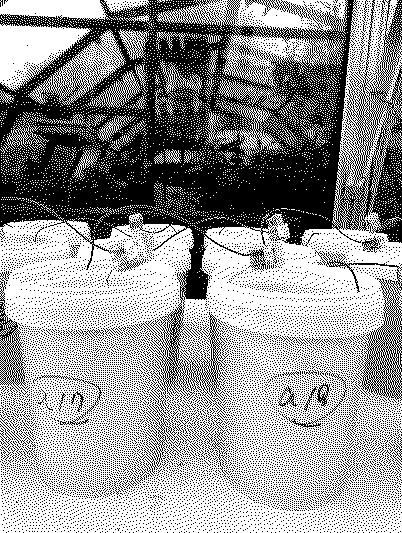
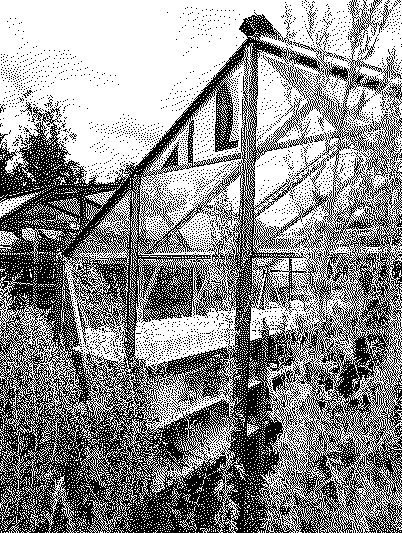
“[…] soil relationalities can be read most visibly for how they foster a different relation of care, one susceptible to alter the linear nature of future-oriented technoscientific, productionist extraction in anthropocentric timescapes.”
(Bellacasa, 2017:106)
The Compost Computer is a collaborative project seeking to advance
creative practice exploring low-carbon computation, permacomputing,
and green-transition technologies. In partnership with
FutureEverything and Manchester-based urban growing cooperatives Sow
the City and MUD, the project produced a proof-of-concept webserver
powered entirely by microbial fuel cells. Moving beyond conventional
renewable energy approaches, the project explored whether
computational infrastructure could be directly integrated into
ecological cycles, powered by compost from Manchester Urban Digger's
Platt Fields urban garden.
The biomatter server represents a proof-of-concept that challenges
assumptions about digital infrastructure's separation from natural
systems. By harnessing microbial fuel cell technology, the server
draws power from the bio-electrochemical processes occurring in
decomposing organic matter, creating a tangible connection between
the digital realm and ecological cycles. This approach questions the
extractive relationship between computation and the environment.
The operational parameters of the system reflect the slow, rhythmic
nature of minimal and situated permacomputing that were the basis
for this research. This ‘situated laboratory’ demonstrates a move
away from "always-on" server infrastructure toward a model that
respects the temporal and material constraints of the environment,
diverting from the technocapitalist reliance on more processing and
electricity power. In this project, the often overlooked aspects of
energy generation from food and garden waste became the primary
point of attention in which the software was based upon – since
minor differences in voltage and amperage readings informed how much
time the server would be able to sustain itself per charging cycle,
and how much data it would be able to serve in the form of a
website.
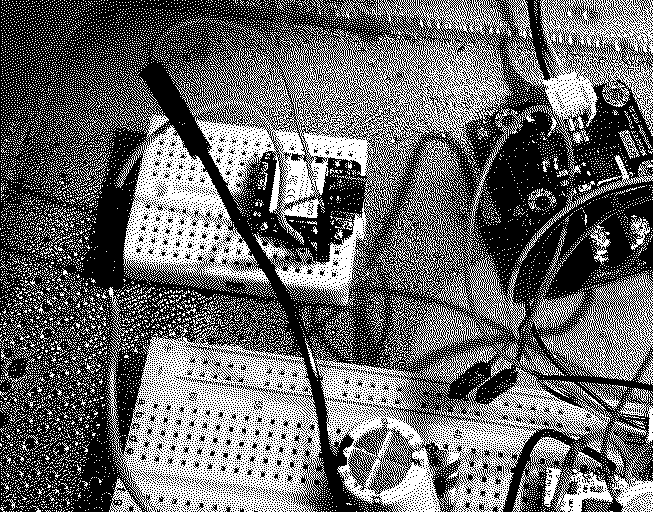
To share this knowledge and encourage further experimentation and uptake we have produced two open access toolkits, covering the server hardware and the web design respectively. These have been written in an accessible fashion to lower the barriers for entry and to broaden the participation of the work we have done. We undertook a day of sharing these outcomes with the local community, hosting a ‘Compost Futures’ event at the garden which brought in surrounding neighbours to learn about compost health and regenerative design. The Compost Computer reconceptualises the relationship between digital infrastructures and ecological systems, and shows how working within constraints can broaden, rather than limit, which futures are possible.

Full Credits:
Project Lead and Management – Wesley Goatley and Eva Verhoeven
Project concept - Mariana Marangoni, Lucy Sollitt, and Shinji Toya.
Project ideation and research –Mariana Marangoni and Shinji Toya
Web design – Mariana Marangoni and Alistair McCloymont
Back-end server architecture lead – Mariana Marangoni
MFC power system and physical computing lead – Shinji Toya
Technical support and consultation:
Felix Loftus, Karsten Goodwin – Specialist Technicians, Central Saint Martins College of Art and Design, Physical Computing Lab
Agnes Cameron - Specialist Technician, Creative Computing Institute
Alistair McClymont and Kevin Lee - additional web development
This project was funded by the Arts and Humanities Research Council through a UK Research & Innovation grant, through the Design Museum's Future Observatory programme.
Events and public appearances:Composting Futures - MUD (Platt Fields Market Garden, Manchester), September 2025
Piksel Festival, Bergen NO, November 2025
Fiber Reassemble Lab: (De)Growing Infrastructures Panel, Amsterdam NL, November 2025